
ServicesBusiness Valuation
Business Valuation in Bee Cave
Before we put a number on your business, we read the books closely and talk with you about how it really runs. You get a free, confidential valuation with plain findings, the reasoning behind the range, and an honest view of what buyers will pay for and what they will question.
What a valuation tells you, and when to get one
A business valuation estimates the price a serious, well-funded buyer would realistically offer for your company in the current market, along with the reasons behind that price. We build it from your tax returns, your profit and loss statements and the way the business actually operates, not from a rule of thumb someone mentioned over lunch.
It is a smart first step if you are thinking about selling in the next few years, weighing an offer that showed up out of the blue, planning a partner buyout, or simply want to know where you stand. Plenty of owners in Bee Cave and Lakeway call us long before they are ready to list, and that is a good time to call.
Our approach is simple. We look first, then we tell you what we saw in plain language, and only after that do we talk about options. Now and then the review points toward holding off for a season or two while you tighten up the books or the lease, so the business goes to market in better shape.
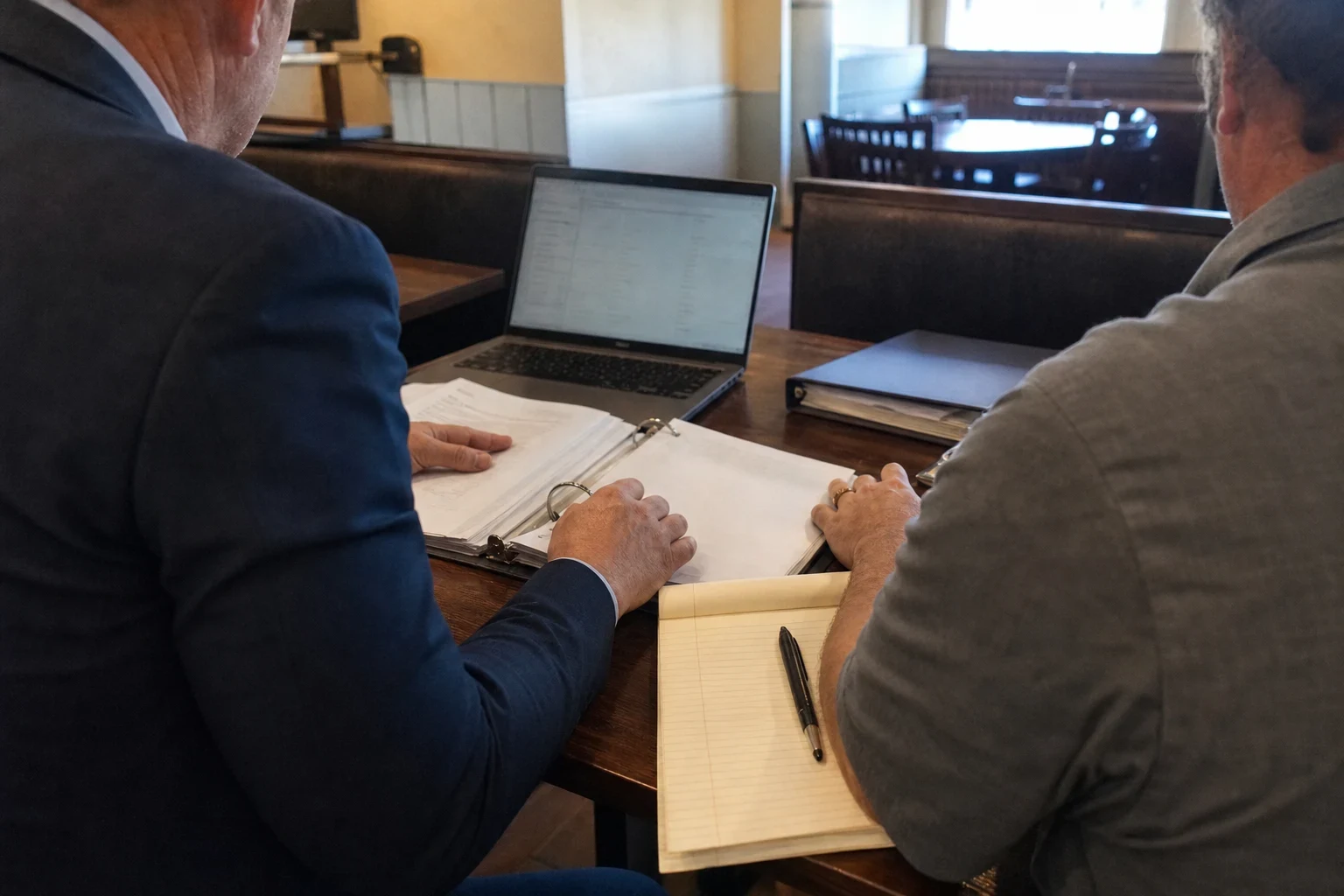
What your valuation includes
- 01
Recast financial statements
We start with your last three years of filed returns and income statements, then adjust for owner salary, personal expenses run through the business and one-time costs. The result is the seller's discretionary earnings or EBITDA figure that buyers and lenders actually work from.
- 02
Market comparisons
We compare your business against recent sales of similar companies by size and industry. The multiple we apply has a basis you can see and question.
- 03
A look at how the business runs
We ask about staff, key customers, suppliers, your lease and how much of the day-to-day depends on you. These details often move value more than revenue does.
- 04
Equipment and inventory review
Equipment, vehicles, fixtures and inventory are listed and considered at realistic values, kept separate from goodwill so you can see what each part contributes.
- 05
A written report and value range
You receive a range, not a single hopeful number, with the reasons behind the high and low ends. We point out what would strengthen the value and what a buyer's accountant is likely to dig into.
Questions about Business Valuation?
Call(512) 881-7039Signs it is time for a valuation
An unsolicited offer arrived
Someone has asked to buy your company and you have no way to judge whether the number is fair. A valuation gives you a reference point before you reply.
Retirement is a few years out
If you hope to step away in two to five years, knowing your value now leaves time to raise it.
Your partner is ready to leave
When both owners agree early on one independent figure, the buyout talks tend to stay calmer and shorter. Our Partner Buyouts and Succession page explains how we handle that.
Your books mix personal and business spending
This is common in owner-run companies and it can be sorted out. Until it is, it hides the real earnings a buyer would pay for.
You have never seen it through a buyer's eyes
Owners know their business from the inside. A valuation shows you how it looks from across the table.
How a valuation works with us
- 1
A private conversation to start
We hear what your company does and why the value question came up now. Then we explain which documents we need, and the whole exchange stays between us, so nothing reaches employees, customers or buyers.
- 2
You share the documents
Usually that means three years of tax returns, current year-to-date financials, an equipment list and your lease. We can meet at our office or over a video call, whichever suits you.
- 3
We review and ask questions
We work through the numbers line by line and come back with questions rather than assumptions. This careful review is where most of the time goes, and it is what makes the final range hold up.
- 4
We walk you through the results
We sit down with you, explain the range and the reasoning, and answer every question. If selling makes sense, we talk about next steps. If it does not yet, we say so.
What moves your valuation
Our valuations are free and confidential, with no retainers and no hidden fees, so the real cost question here is about value. These are the factors that push the range up or down for most small and mid-sized businesses.
- Clean, verifiable earnings
- A buyer's lender will only finance profit that shows up on filed returns. Cash sales that were never reported won't count toward value, no matter how busy the register looked.
- How much rests on you
- If you are the main salesperson, the key license holder and the person every customer calls, a buyer sees risk. A capable manager already in place usually supports a stronger multiple.
- Customer concentration
- One customer bringing in a third of revenue lowers value. A wide spread of steady accounts or recurring contracts raises it.
- Lease terms
- A lease with years remaining and a clear assignment clause reassures buyers. A lease ending soon, or one the landlord can refuse to transfer, can stall a deal.
- Trend and industry
- Three years of growing revenue earns more than flat or falling numbers. Some industries also simply trade at higher multiples than others.
Business valuation questions
Is the valuation really free?
Yes. We do not charge for a valuation and we do not ask for a retainer. If you later decide to list with us, you pay nothing up front, and we only get paid when the seller does.
Does anyone at my company have to know about this?
No. Everything you share stays confidential, and we do not contact staff, customers or suppliers. Many owners send documents after hours or meet us by video for exactly this reason.
How is this different from a formal appraisal?
A broker's valuation estimates what the market is likely to pay in a sale. Estate matters, divorce and some lender requirements can call for a formal appraisal prepared by an independent appraiser with the right credentials. When your situation needs one, we will say so early, and you are free to pass our report along to them.
What if the number is lower than I hoped?
That happens, and it is better to learn it now than from a buyer. We show you which factors pulled the value down and which ones you can change. Many owners use the report as a working plan, and our Exit Planning service picks up from there.
Do I have to sell after getting a valuation?
Not at all. There is no obligation to list, and plenty of owners simply want to know where they stand. The report is yours to keep and use however you like.
How long does it take?
It depends mostly on how quickly the documents come together and how tidy they are. Clean, organized records move faster. We will give you a realistic sense of timing on the first call.

Find out what your business is worth
A short, confidential conversation is the place to start. We will tell you what we need and how we will look at it, with no pressure to list.